
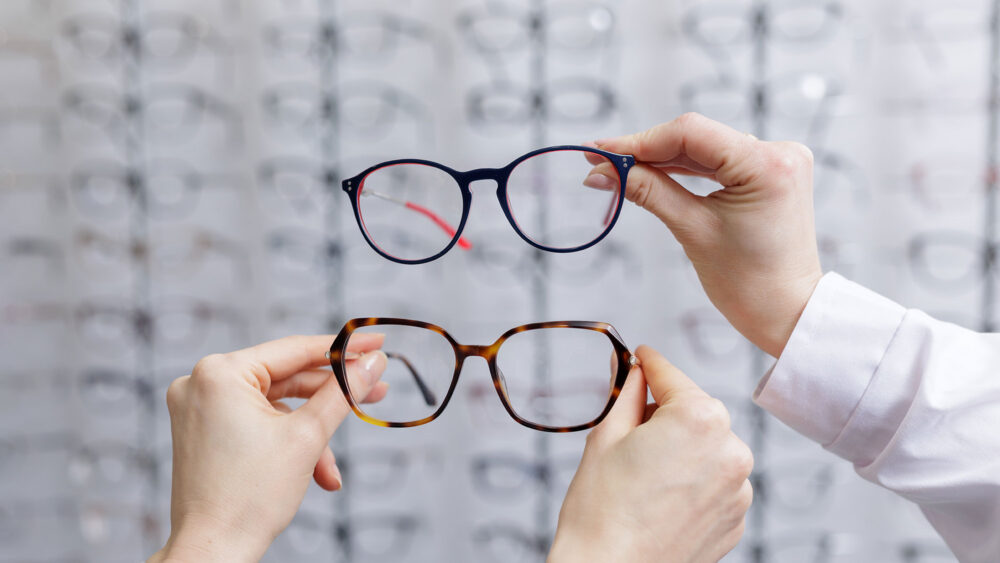
When it comes to delivering exceptional eyewear, frame selection often gets the spotlight. But seasoned eye care professionals know the real performance of a pair of glasses lies in the lenses. The materials you recommend don’t just affect vision correction, they directly influence comfort, durability, and how patients feel about their eyewear long after they leave your office.
Understanding the subtle differences between lens options can help you guide patients toward choices that improve both satisfaction and long-term wear.
Comfort Starts with Weight and Thickness
Patients may not always articulate it, but they immediately feel the difference in lens weight. High-index materials, for example, offer thinner profiles for higher prescriptions, reducing bulk and improving overall comfort. This is especially important for patients wearing their glasses all day.
On the other hand, standard plastic lenses may be perfectly suitable for lower prescriptions, but can become noticeably thicker and heavier as prescriptions increase. Helping patients understand this tradeoff upfront can prevent dissatisfaction later.
Durability Impacts Daily Confidence
For active patients or those who are harder on their eyewear, durability plays a major role in long-term satisfaction. Polycarbonate and Trivex lenses are excellent choices for impact resistance, making them ideal for children, athletes, or anyone with a more demanding lifestyle.
However, durability isn’t just about preventing breakage. Scratch resistance, coating quality, and overall lens integrity all contribute to how well the lenses hold up over time. A lens that looks worn after a few months can negatively impact patient perception, even if the prescription is perfect.
Optics Influence More Than Just Vision
Clarity is expected, but not all materials perform the same. Trivex, for instance, offers excellent optical clarity with minimal distortion, making it a strong choice for patients sensitive to visual imperfections. High-index lenses, while thinner, can sometimes introduce slightly more chromatic aberration depending on the material and coatings used.
Taking the time to match lens material with patient expectations, whether they prioritize thinness, clarity, or both, can make a noticeable difference in how they experience their eyewear day to day.
Patient Perception Shapes the Experience
Beyond the technical aspects, lens choices influence how patients perceive value. A lightweight, thin, and clear lens often feels “premium” to the wearer. Conversely, thicker or heavier lenses can feel outdated or less refined, even if they meet the prescription requirements.
This perception matters. When patients feel confident in their eyewear, they’re more likely to wear it consistently, return for future purchases, and refer others to your practice.
The Role of Your Lab Partner
Even the best material recommendation relies on precise fabrication. A trusted lab partner ensures that lenses are processed accurately, coatings are applied consistently, and the final product meets the expectations set during the dispense.
At Allentown Optical, we understand that every lens choice carries weight, both literally and figuratively. Our team works closely with eye care professionals to deliver high-quality lenses that support patient comfort, durability, and satisfaction from day one.
Because in the end, it’s not just about helping patients see better. It’s about helping them feel confident in what they wear every day. Contact Allentown Optical to talk directly with experienced lab technicians who are here to help.